Thursday, September 13, 2012

Kontraste erleben: Indien trifft Sachsen-Anhalt


Zwei Kulturen, ein Filmemacher: Heute Abend wird um 19 Uhr im Salzlandmuseum in Schönebeck eine neue Ausstellung eröffnet


Kontraste erleben: Indien trifft Sachsen-Anhalt

13.09.2012 04:17 Uhr


Von Ulrich Meinhard


Kleine Pause während der Vorbereitungen gestern. Von links: Vahid Shahidifar wird die Ausstellungseröffnung musikalisch begleiten, sehr zur Freude von Ravi Shekhar sowie Dorothea Bethke und Manon Bursian von der Kunststiftung Sachsen-Anhalt.


Kleine Pause während der Vorbereitungen gestern. Von links: Vahid Shahidifar wird die Ausstellungseröffnung musikalisch begleiten, sehr zur Freude von Ravi Shekhar sowie Dorothea Bethke und Manon Bursian von der Kunststiftung Sachsen-Anhalt. | Foto: Ulrich Meinhard
Einen Kontrast der Kulturen können Besucher einer Ausstellungseröffnung heute Abend im Salzlandmuseum in Schönebeck erleben. Der indische Filmemacher Ravi Shekhar präsentiert einen Streifen, der sowohl in Indien, als auch in Sachsen-Anhalt entstand.
Anzeige
Schönebeck l "Laptop und Beamer reagieren aufeinander. Das ist schon mal gut." Petra Koch, die Leiterin des Salzlandmuseums im Schönebecker Stadtteil Bad Salzelmen, ist guter Dinge. Die Technik wird zum Laufen gebracht an diesem Vorabend einer neuen Ausstellungseröffnung.
Zu der sind heute um 19 Uhr alle Menschen willkommen, die Interesse an der indischen Kultur haben sowie (und hier wird es spannend) miterleben wollen, wie sich der Kontrast zwischen dem Straßenbild dort und hier darstellt. Den Film hat Ravi Shekhar gedreht. Er beginnt mit einem Flusssufer und Plätzen voller Menschen. Geräusche von überall her. Farben, bunte Gewänder, Weihrauch in der Luft. Dann kommt der Schnitt: Eine weite, menschenleere Landschaft. Ein Auto fährt vorbei. Stille. Sachsen-Anhalt.
Wo sind die Menschen hin? Diese Frage hat sich Ravi Shekhar gestellt, als er im April in die Altmark kam. Die Kunststiftung Sachsen-Anhalt hatte den 53-Jährigen eingeladen und gewährte ihm ein halbjähriges Stipendium in Salzwedel.
Deutschland kannte der Inder bereits, allerdings den westlichen Teil. Der Osten war neu für ihn. Der Unterschied fällt dem Multimedia-Künstler auf, er meint: "Im Vergleich zu westdeutschen Städten gibt es hier noch Entwicklungsmöglichkeiten." Sehr viel größer aber ist der Unterschied zu Mumbai, der Millionenstadt am Ganges. Dort ist Ravi Shekhar zu Hause.
Gegenüber der Volksstimme beschreibt er es so: "In Deutschland, natürlich auch in den neuen Bundesländern, gibt es mehr Frieden, mehr Ruhe. Selbst kleine Städte, sogar Dörfer sind infrastrukturell sehr gut entwickelt. Alles scheint perfekt organisiert zu sein. Die Zuständigkeiten sind klar geregelt."
Beeindruckt hat ihn kürzlich bei einem Treffen von Unternehmern, dass jeder der Teilnehmer am Ende seinen Stuhl artig wieder in einen Nebenraum brachte. "Das würde in Indien nie passieren. Da gibt es Leute für niedere Arbeiten", stellt er fest.
Es sei nicht von der Hand zu weisen, dass die Lebensbedingungen in Deutschland eindeutig besser sind: "Es gibt mehr Raum, mehr Kommunikation, mehr Reisemöglichkeiten. Aber die Menschen hier sind trauriger. Das Toleranzlevel ist niedrig. Die Inder sind toleranter. Vielleicht können ja beide Seiten voneinander lernen", hofft Ravi Shekhar.

Tuesday, September 11, 2012

stills from my film -US

US
(the film)
I do not exist alone. I am just a patches of many influences. City, school, collage, parents, friends, books, films, music, artists, authors, literature, language, space, places...the list is endless. this experimental film is about the visual and sound influences I have been living with for years. And the people and influences I have been gathering during my stay in Germany and travel to other countries. Life is all bout US. This is also about our taboos and fear- we avoid. 


 Ravi with wife Uma


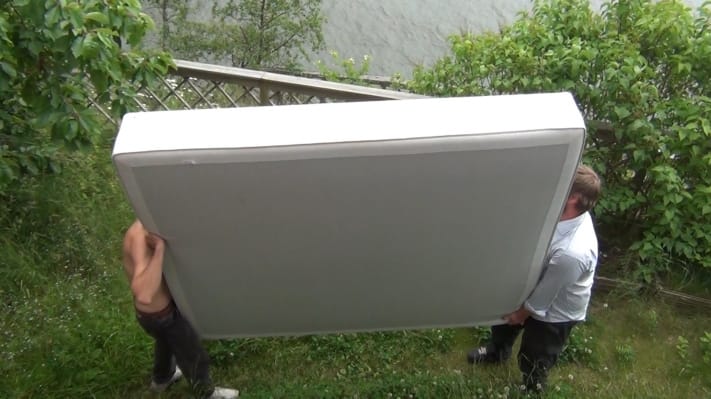
Bed on the boat in Stockholm

 We all need bed to sleep

Baumkuchen in Salzwedel


Gate to the other side 


 Oskar's first day at kindergarten 

 Frank Platte


 German mother and child


 Vincent got married in Indian vadic tradition in Salzwedel


   Vincent got married in Indian vadic tradition in Salzwedel

Monika & Michael practice Indian tradition of meditation


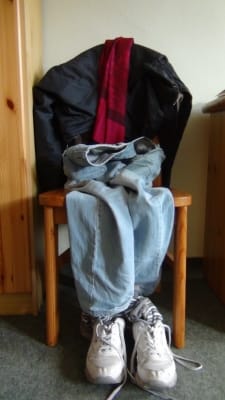
                                                                       Dust to dust


                                                                        Strong wind at Sult


We are trying to present a new synthesis between East and West. The eastern methods are more
individualistic, more inward-going, and more concerned with solitude, aloneness, and the person.
They are meditative methods, more concerned with the person and his integrity. They are not group
methods.
The western methods are all group methods, and are more out-going, more concerned with
communication and relationships; with the group, and integrity in relationships, not in aloneness.
So what they can be reduced to is: the western methods are more concerned with love, the eastern
methods more with meditation.
These are the two polarities of human consciousness – love and meditation. Meditation means to
be alone, as if you alone exist. And love means that you are not, the other is; as if you exist only
in relation to the other, and there is no other exiStence. These are the two Polarities. and taken
separately they both become extremes, and both are dangerous.
The East has tried the first extreme – of meditation. It became life-negating and escapist – hence
the poverty, the ugliness. There has been no scientific progress in the East, because nobody has
paid any attention to society. All those who were interested in any search always escaped
In the West, the society has progressed. There is a better standard of living, more affluence and
comfort, more convenience, more health, and more life. But they have moved to the other extreme
and the individual has by and by disappeared.
These two things taken separately are dangerous, because life exists in polarity. The whole
emphasis here is that there are no opposites, there are only complementary.
So meditation and love are not opposites, they are complementary. All religion should be life-affirming,
and life should be meditative.
So we are trying to create a synthesis, and it is not only an ideology – because that is not difficult.
This synthesis is really in the being of people who come here. A new synthesis is being tried and
much depends on it.
A world psychology has to be given birth to. 
The East has succeeded in certain ways and failed in
others, just as the West has failed in certain areas but succeeded in others.


Monday, September 10, 2012

FILMPREMIERE: VIDEOPROJEKT „UNS” VON RAVI SHEKHAR


Thursday, August 9, 2012

me in newspaper


me in newspaper !


Ravi Shekhar for six months in the Altmark / premiere on 16 September in the movie theater


From Mumbai to Salzwedel "culture shock" suggests the film shoot

08/09/2012 04:19 clock

By Alexander Walter


Ravi Shekhar is for six months in Salzwedel scholarship houseguest.  With sequences from the Altmark here he turns a movie about themselves


Ravi Shekhar is for six months in Salzwedel scholarship houseguest. With sequences from the Altmark here he turns a movie about yourself | Photo: Alexander Walter
He comes from Mumbai, India. In Salzwedel turns Ravi Shekhar a film about the Altmark. Primarily the work is an exploration of yourself
Display


Salzwedel was l When Ravi Shekhar at Easter 2007 by the Salzwedel city, he could not believe it: roads and lanes were measured by Indian standards, such as deserted. Only a few people walked through the pedestrian zone. "For me it was a culture shock," says the native of the 12-million-person metropolis of Mumbai artists. At home in his native one could hardly escape the crowds. "There can only be found very difficult a piece of solitude."
During this first encounter with Salzwedel he was thinking about it, to produce in this peaceful place for him as a movie, says the 53-year-old. Only when a friend gave him the idea to apply for a place in Salzwedel residential building, however, took this idea to specific traits. After his application was Shekhar in the spring of this year the award for his project. At the invitation of the house and Salzwedel grantees funded by Christa Maria Meyer-grant from the Arts Foundation of Saxony-Anhalt, the trained photographer now spends six months in the Jeetzestadt.
The film, which turns the Indians are here, but not by Salzwedel, Altmark and as such, even if occurring landscape and people of the region. "It's a movie about me, a kind of self portrait," says the artist. A self-portrait of an Indian city dwellers, just turned in Salzwedel? There are contradictions such as these, would build on the Shekhar with his production.
The film tells about the journey (s) by the artist, the spatial and in a biographical sense. Beginning with scenes from his native city of Varanasi on the Ganges funeral, Shekhar are landscapes, historical events and people who have met him space. Not least of those he met during his stay in Salzwedel and the Altmark.
On display here are some excerpts from the wine festival Salzwedel, Salzwedel of the Peace Race, or concerts in Salzwedel Hanseat. Over about 60 minutes building block by building block an image of the artist's life and his vision created the world, which, the longer the film, becoming richer and more sophisticated.
The aim of the production is there to "disrupt" the often gridlocked world view of people and to expand, says Ravi Shekhar. "It is only through disruptions and changes are possible."
So go to him about the realization that no one stands alone, but always developed in response to external conditions, and other people.
"If you want to know a person really, meet his friends."
An old adage that bring good to the point: "If you want to know a person really, meet his friends," says the 53-year-old. This wisdom is the reason why he, above all let others come to speak in his film. And yet another factory Shekhars wisdom lies at the bottom: "If you want to read books, travel," they say. Break through the old world, travel pictures, will be supplemented and extended. "In India I'm just an artist, here I am suddenly the Indians, and thus representative of my culture," says Shekhar. Through such experiences they would be aware of their own origin and ways of thinking.
One of the most important experience in the life of the Indian Ravi Shekhar was always his first visit to Salzwedel. From experiences like this and its importance for the development of the people is his film.
He can be seen on Sunday evening, 16 September, in Salzwedel movie palace. Ravi Shekhar is already grateful for the time in Salzwedel. "I am very happy that I can make this film here," he says. "Talking to other people is something magical."

(pls forgive google translation if you manage to read the whole article :)